Execution Risks Always Rise to the Top
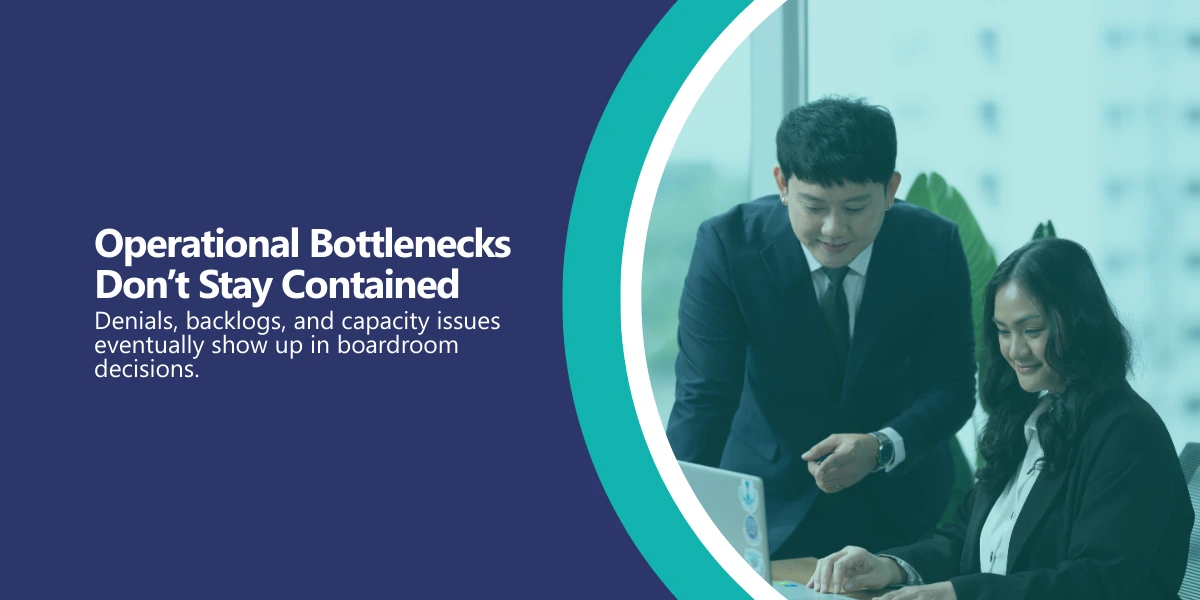
In healthcare organizations, most operational issues begin quietly. A delay in intake processing. An uptick in denials. A staffing gap in billing. These bottlenecks often start as tactical concerns—but when they linger, they quickly become strategic risks.
When revenue slows, costs rise, or patient experience suffers, operational inefficiency stops being an isolated problem. It becomes a board-level issue. And it usually surfaces too late—after damage is done to financial performance, team morale, or trust in leadership.
That’s why solving operational bottlenecks isn’t just about patching workflows. It’s about building scalable, accountable support systems—often through the right BPO partnership.
Quick Summary: What You’ll Learn
- How day-to-day execution issues escalate into executive priorities
- Where breakdowns typically originate in the revenue cycle or support model
- How BPO partnerships can act as stabilizers—not just cost-savers
- A tool to evaluate whether your BPO relationships are built for scale
How Bottlenecks Become Strategic Risks
1. Delays in Intake or Documentation Slow the Entire Pipeline
Front-end issues like missing documentation or delayed intake reviews cause downstream friction in billing, authorizations, and care coordination. These are often invisible until KPIs dip—and they’re hard to recover from without extra labor or overtime.
2. Denials Pile Up Without Root Cause Visibility
When denial management is reactive, not structured, you lose clarity on trends. Leaders are asked to explain margin impacts without insight into the drivers. That gap becomes a credibility risk.
3. Staff Turnover Creates Instability
High attrition in billing or patient-facing roles leads to onboarding delays, inconsistent performance, and rising error rates. Leadership may need to pause growth plans or delay initiatives while operations try to stabilize.
4. Vendors Fail to Flag Issues Early
If your BPO partner only reports on SLA misses after they occur—or worse, not at all—you’re flying blind. The board ends up hearing about failures before leadership does.
5. Performance Trends Lack Context or Comparability
When reporting is inconsistent across functions or vendors, decision-makers can’t identify where performance is breaking down. This leads to reactive, not strategic, decisions—like hiring more instead of fixing process.
The Role of a BPO Partner in Preventing Escalation
A strong healthcare BPO partner does more than deliver on SLAs. They help you see around corners, identify early bottlenecks, and build operational resilience. That includes:
- Real-time reporting with context and recommendations
- Stable, well-trained teams who reduce rework and escalation
- Escalation protocols that resolve issues before they hit leadership
- Alignment with internal workflows to ensure continuity, not fragmentation
- Capacity planning that adapts to seasonal or volume-based changes
Is Your Current BPO Setup Creating Confidence or Concern?
When boards start asking about billing gaps, aging AR, or service backlogs, the operations team has two options: justify the status quo—or point to a model that’s working.
Final Thoughts
Operational issues don’t stay buried for long. The right BPO relationship should be a pressure-release valve, not another fire to manage. It should give leaders confidence, not more questions.
If your current structure can’t scale without delays, rework, or manual recovery, the problem isn’t isolated. It’s systemic.
→ Download the Healthcare BPO Partnership Scorecard
Use it to evaluate whether your current outsourcing model is truly supporting operational scale—or quietly slowing you down.