Turnover in Healthcare Ops Is More Than an HR Problem
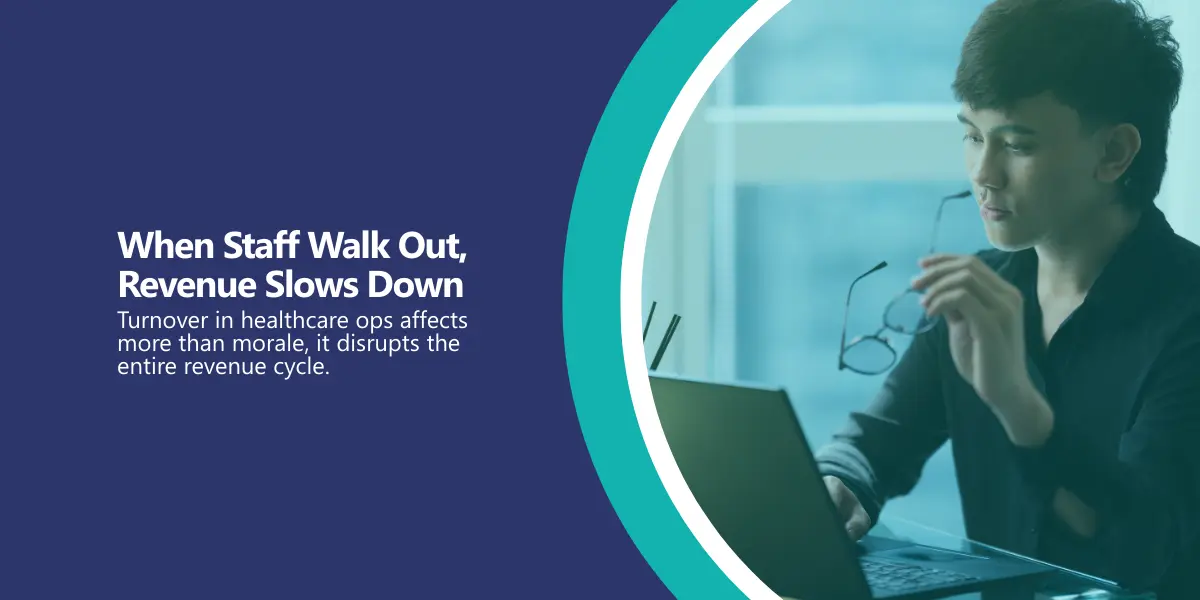
In clinical care, turnover is visible. Patients feel it. Staff morale dips. But in operations (RCM, intake, billing, scheduling) the effects are often hidden until they hit the bottom line.
A single resignation in a high-skill back-office function can disrupt workflows, delay claims, increase errors, and strain the rest of the team. Multiply that across a quarter or a year, and the financial and operational impact becomes significant.
The question isn’t just how many people left. It’s what broke when they did?
Quick Summary: What You’ll Learn
- How turnover impacts operational, financial, and compliance outcomes
- Why hidden costs often outweigh visible ones
- Where BPO partnerships can stabilize critical functions
- A downloadable scorecard to assess vendor contribution to continuity
5 Ways Turnover Impacts Healthcare Operations
1. Process Knowledge Walks Out the Door
Even with SOPs in place, much of your billing or intake knowledge lives in people’s heads. When they leave, nuance is lost and rework rises. It can take months for a replacement to reach the same level of speed and accuracy.
2. Training Costs Compound Over Time
Hiring and onboarding aren’t just HR costs. They pull time from team leads, affect productivity, and often involve temporary slowdowns in claim submission or follow-up. The cost of time lost can outweigh the salary delta.
3. Billing Delays and Errors Increase
New hires, especially in complex RCM roles, take time to ramp up. During this window, claim quality, follow-up timing, and denial resolution all suffer. Revenue may slow down even before leadership sees the cause.
4. Burnout Rises for Remaining Staff
As others pick up the slack, quality dips, team morale declines, and the risk of secondary turnover grows. This creates a negative cycle that becomes harder to interrupt the longer it goes unchecked.
5. Compliance Risk Increases
Incomplete follow-up, missed authorizations, or inconsistent documentation can create compliance gaps. With more eyes on healthcare data handling, one missed task can lead to audit findings or payer friction.
How BPO Partnerships Help Mitigate Turnover Risk
A well-structured BPO relationship doesn’t just fill gaps, it provides:
- Stable, trained teams with low attrition
- Cross-trained agents to maintain continuity during changes
- Ramp-up plans that reduce onboarding lag
- Structured reporting to track trends before performance dips
- Process ownership that ensures handoffs don’t fall apart when staff change
With the right partner, turnover in your internal team doesn’t mean operational breakdown.
Final Thoughts
Turnover in healthcare operations is inevitable. But disruption doesn’t have to be. The real cost isn’t in recruiting fees, it’s in everything that slows down when experienced staff walk out.
Stability is a strategic advantage. And for many organizations, the best way to protect it is through the right external support model.
→ Download the Healthcare BPO Partnership Scorecard
Use this tool to assess whether your current vendor is helping protect your operations from staff turnover or adding to the risk.